







I. Understanding the Word Day in French
Learning how to say day in French is one of the most practical steps for beginners. You’ll use it constantly beside number in French when talking about schedules, travel, or daily activities.
In French, there are two ways to say day in French and each carries a different nuance:
- jour → a specific calendar day, a point in time. Example: Un jour, je visiterai Paris. → “One day, I’ll visit Paris.”
- journée → the duration of a day or how the day goes. Example: Bonne journée ! → “Have a good day!”
Quick tip: Use day in French – jour when referring to a date or countable day, and – journée when describing how your day passes (morning to night).
II. The Days of the Week in French
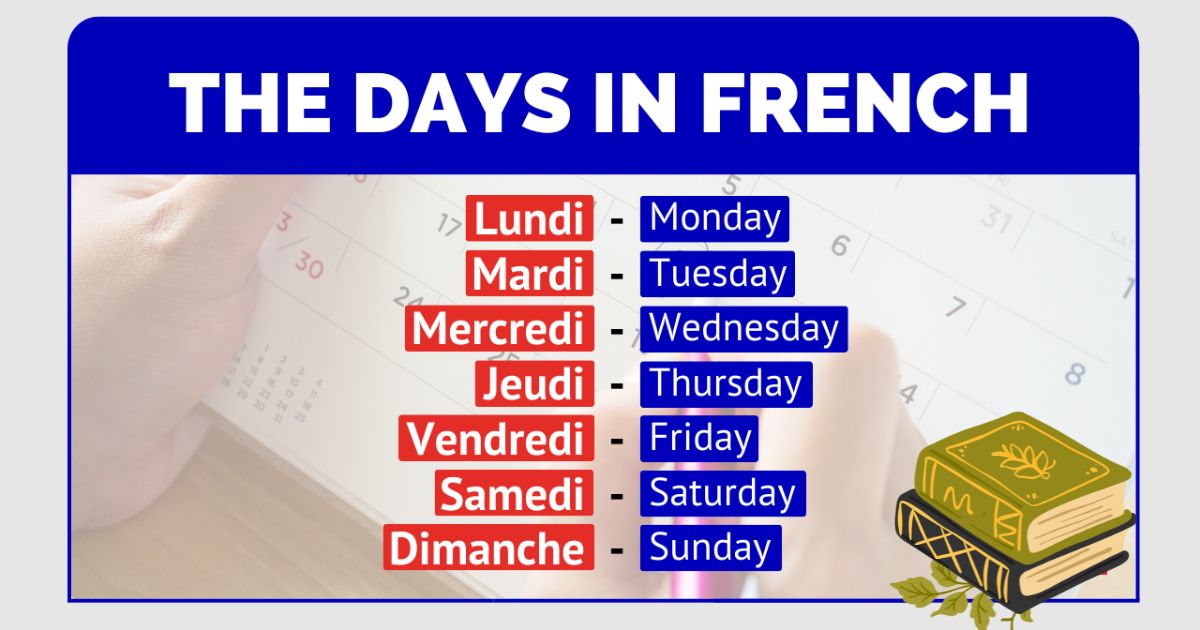
Once you understand day in French, the next step is to learn the French weekdays. These are essential vocabulary French business appointments or talking about routines.
1. The 7 Days of the Week
- Monday → lundi
- Tuesday → mardi
- Wednesday → mercredi
- Thursday → jeudi
- Friday → vendredi
- Saturday → samedi
- Sunday → dimanche
Note: Day in Frenc are not capitalized – always write lundi (not Lundi).
2. Quick Pronunciation Guide
- The ending -i in lundi, mardi, jeudi, samedi sounds like “ee.”
- In mercredi, the stress is slightly on the last syllable: mer-cre-di.
III. Using Days of the Week in Sentences
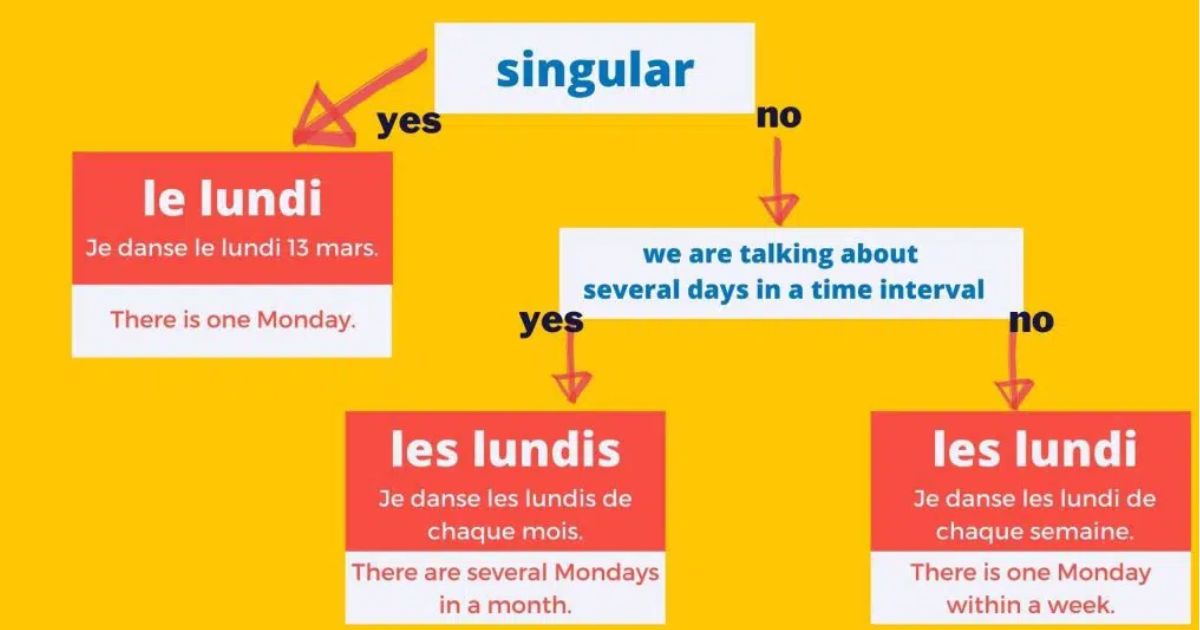
French sentences about days follow clear patterns. Here’s how to talk about what happens on, every, or during certain days.
1. Asking the Day or Date
When asking for the day or the date in French, use these two questions:
- Quel jour sommes-nous ? → “What day is it?”
- Quelle est la date aujourd’hui ? → “What’s the date today?”
You might also hear:
- On est le combien aujourd’hui ? → “What’s today’s date?”
2. Saying “On Monday” or “Every Monday”
To express specific or repeated days:
- le lundi → “on Mondays” (habitually)
- tous les lundis → “every Monday”
- Je travaille le vendredi. → “I work on Fridays.”
- Le dimanche, je me repose. → “On Sundays, I rest.”
IV. How to Say and Write the Date in French
Knowing how to say the date in French is just as important as knowing the days of the week, especially when filling forms, planning trips, or making appointments.
1. The Standard Date Format
In French, the date follows this structure:
le + number + month + (year)
Examples:
- le 14 juillet 1789 → “July 14th, 1789”
- le lundi 25 décembre 2023 → “Monday, December 25th, 2023”
Important rules:
- Use day–month–year order.
- Days and months are lowercase.
- Only the 1st day of the month uses le premier (e.g., le premier janvier).
2. Do You Need “Le” Before the Date?
Yes – most of the time. Use le when you’re stating or writing a date clearly:
- Nous sommes le 5 mai. → “It’s May 5th.”
- On est le 12 janvier. → “It’s January 12th.”
For general mention (like in a story), you can sometimes drop it, but “le” is safest for beginners.
3. Common Mistakes to Avoid
- le Novembre 5 → le 5 novembre
- le 1 novembre → le premier novembre
- Lundi 3 Mars → le lundi 3 mars
V. Related French Vocabulary About Time and Dates
Expanding your vocabulary about day in French helps you sound natural in everyday conversations.
- today → aujourd’hui
- tomorrow → demain
- yesterday → hier
- the day after tomorrow → après-demain
- last week → la semaine dernière
- next month → le mois prochain
Note: All time-related nouns – jour, mois, an, matin, soir – are masculine in French.
See also:
Mastering how to say day in French and how to write the date in French opens up daily communication skills that every learner needs. For faster progress, explore Gurulango’s French Course AI-powered lessons, instant pronunciation feedback, and fun daily quizzes to make learning natural and enjoyable.
VII. FAQs About “Day” and “Date” in French
Even after learning the words jour, journée, and the days of the week, many learners still get confused when using French dates in real conversation.
- How do you say day in French?
Use jour (a calendar day) or journée (the duration of a day).Bonne journée ! / Quel jour sommes-nous ?
- How do you write the date in French?
le + number + month + year, e.g., le 14 juillet 1789. Use lowercase and day–month–year order.
- Do you always need “le” before the date?
Yes, say le 10 mars, le 25 décembre, etc. It’s natural and grammatically correct.
- Are French days and months capitalized?
No. Write lundi, janvier, avril — never with uppercase.
- Which day of the month uses an ordinal?
Only the first day: le premier janvier.