







What is an HSK Certificate?
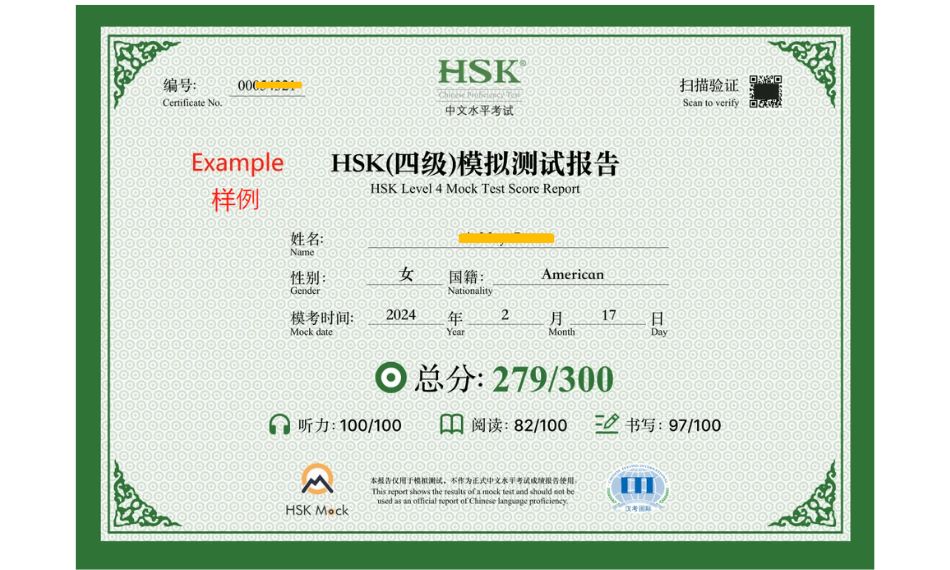
People who learn Chinese might have heard of HSK certificate. The HSK certificate (Hànyǔ Shuǐpíng Kǎoshì) is an official Chinese language proficiency certificate issued by Hanban / the Chinese Testing International (CTI), under China’s Ministry of Education. It measures your ability to use Mandarin Chinese in daily life, study, and work. The test evaluates your listening, reading, writing, and speaking skills across multiple levels, from beginner to advanced.
Why Choose HSK?
The HSK certificate isn’t just a test score, it’s your passport to opportunities in education, work, and personal growth. You can use your HSK results for:
- College enrollment, course placement, or credit exemption at Chinese universities.
- Job applications, promotions, or training in companies doing business with China.
- Teaching evaluation, if you’re an educator or language program leader.
- Self-assessment, helping you measure your learning progress objectively.
Who Should Take the HSK Test?
The HSK test is for anyone studying or using Chinese in a meaningful way. You might be:
- A student applying for a degree or scholarship in China.
- A professional working with Chinese clients or companies.
- A teacher who needs official proof of Mandarin proficiency.
- A learner who wants to track progress and stay motivated.
- An expat preparing to work or live in China long-term.
Benefits of Having an HSK Certificate

An HSK certificate opens doors academically, professionally, and personally. It’s a recognized proof of your Chinese skills that can help you advance in multiple areas.
- Globally recognized credential for Chinese language proficiency.
- Required for university admission and scholarships in China.
- Strengthens job applications and supports career growth involving China or Mandarin communication.
- Provides a clear benchmark for assessing your progress and setting long-term language goals.
HSK Levels and Structure
The HSK has been redesigned to cover up to nine levels, grouped into three main stages: Beginner, Intermediate, and Advanced.
Beginner Stage (Levels 1-3)
This levelis for those who learn Chinese for beginners, focusing on basic Chinese characters, essential vocabulary, and simple conversation skills. These levels build a solid foundation for communicating in everyday situations.
| Level | Requirements | Structure |
| HSK 1 | Recognize and use approximately 300 common Chinese characters.
Understand approximately 500 HSK1 vocabulary. Engage in simple conversations on familiar topics. Introduce yourself and others. Respond to basic greetings. |
Listening: 20 questions (15 min)
Reading: 20 questions (17 min) Total test time: 40 minutes (including time for filling in personal information) |
| HSK 2 | Recognize and use around 600 characters.
Understand about 1,200 HSK2 vocabulary. Communicate in simple tasks like shopping or ordering food. Ask and answer questions about hobbies, travel, and daily routines. Write short messages and sentences. |
Listening: 35 questions (25 min)
Reading: 25 questions (20 min) Total test time: 55 minutes (including time for personal info) |
| HSK 3 | Recognize and use around 900 characters.
Understand approximately 2,000 HSK3 vocabulary. Discuss familiar topics in daily life, school, or work. Make simple plans and express preferences. Write short paragraphs on familiar topics. |
Listening: 40 questions (30 min)
Reading: 30 questions (25 min) Writing: 10 questions (20 min) Total test time: 75 minutes |
Intermediate Stage (Levels 4-6)
At the intermediate stage, learners can handle more common Chinese phrases, complex conversations, read newspapers or simple novels, and write short passages. These levels prepare learners for academic and professional Chinese use.
| Level | Requirements | Structure |
| HSK 4 | Recognize and use about 1,200 characters.
Understand approximately 3,000 HSK4 vocabulary. Discuss personal and professional topics in detail. Give opinions, explain ideas, and narrate experiences. Write short essays or formal messages on familiar topics. |
Listening: 35 questions (30 min)
Reading: 40 questions (40 min) Writing: 10 questions (35 min) Total test time: 105 minutes |
| HSK 5 | Recognize and use around 1,500 characters.
Understand approximately 4,000 HSK5 vocabulary. Read newspapers, magazines, and simple novels. Discuss abstract topics and professional issues fluently. Write structured essays (150-200 words) on familiar topics. |
Listening: 45 questions (35 min)
Reading: 45 questions (45 min) Writing: 10 questions (40 min) Total test time: 120 minutes |
| HSK 6 | Recognize and use approximately 1,800 characters.
Understand approximately 5,000 HSK6 vocabulary. Read complex texts and idiomatic expressions. Present clear, detailed arguments in discussions and presentations. Write essays with coherent structure, style, and tone. |
Listening: 50 questions (40 min)
Reading: 50 questions (45 min) Writing: 10 questions (50 min) Total test time: 135 minutes |
Advanced Stage (Levels 7-9)
HSK 7-9 targets advanced learners who aim to excel in Chinese, enabling them to handle complex topics and communicate confidently in academic and professional contexts.
| Level | Requirements | Structure |
| HSK 7-8-9 | Recognize and use around 3,000 Chinese characters.
Understand approximately 11,092 words. Comprehend and articulate abstract ideas clearly. Use Chinese at a near-native level. Communicate fluently in all situations, including academic and professional environments. |
Listening: 40 questions (30 min)
Reading: 47 questions (60 min) Writing: 2 questions (55 min) Speaking: 5 questions (24 min) Translation: 2 written + 2 oral translation tasks (41 min) Total test time: ~210 minutes |
Registration for the HSK Exam
In order to get an HSK certificate of your own, you will have to register for an HSK test.
Where and When Can You Take the HSK Exam?
Before registering, check the available test centers and upcoming exam dates to plan your schedule.
| Category | Details |
|---|---|
| Where to Register | Official website: www.chinesetest.cn
Local test centers: Universities and Confucius Institutes in over 150 countries. |
| What to Bring | Valid passport or ID
Recent photo Payment for exam fee |
| When Exams Are Held | HSK exams are organized multiple times a year, usually every month. Check the official website for the most up-to-date schedule. |
When Are HSK Exams Held?
HSK exams are offered multiple times per year, usually every month. Check the schedule on the official website for the most updated dates.
How Much Does the HSK Exam Cost?
The exam fee varies depending on the level and your country. The table below shows the average exam fees by level:
| HSK Level | Average Fee (USD) |
|---|---|
| HSK 1–2 | $30-40 |
| HSK 3–4 | $50-70 |
| HSK 5–6 | $80-100 |
| HSK 7–9 | $100-150 |
How Long Is the HSK Certificate Valid?
Your HSK certificate is valid for two years when used for official purposes, such as university admission. However, for personal use (like tracking progress or career records), it doesn’t expire.
HSK Certificate vs. HSKK
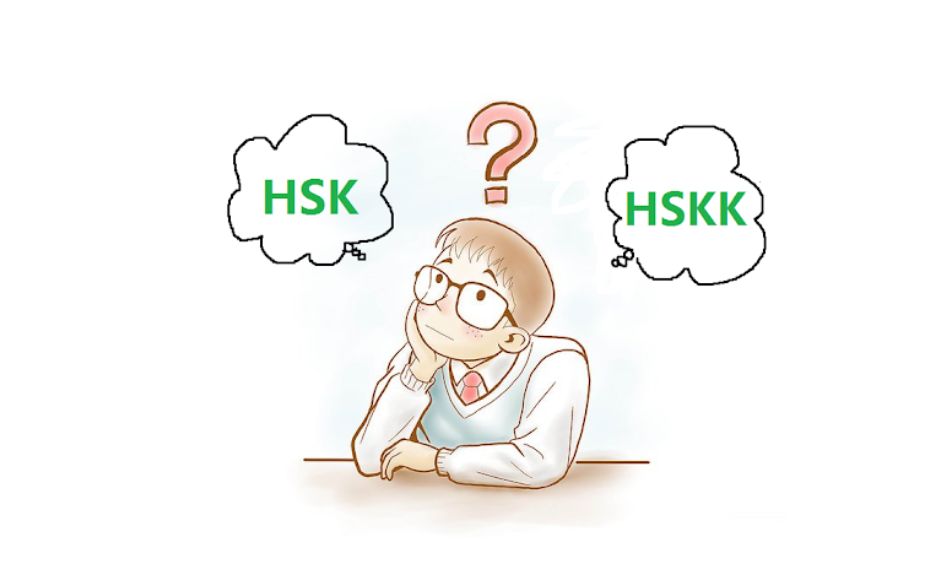
Many people get confused between the HSK and HSKK exams. GuruLango can help you clearly identify the differences between these two:
| Test | Full Name | Skills Assessed | Purpose / When Required |
|---|---|---|---|
| HSK | Hànyǔ Shuǐpíng Kǎoshì | Listening, Reading, Writing | General Chinese proficiency; required for study, work, scholarships |
| HSKK | Hànyǔ Shuǐpíng Kǒuyǔ Kǎoshì | Speaking only | Assess spoken Chinese; often required alongside HSK for scholarships or teaching positions |
How the HSK Is Graded
HSK exams are scored based on the number of correct answers in each section, and each level has a total maximum score. The grading system determines whether you pass and how well you have mastered the skills tested at your level.
| HSK Level | Total Score | Passing Score | Passing % | Result Release |
|---|---|---|---|---|
| HSK 1–2 | 200 | 120 | 60% | About 1 month after the exam |
| HSK 3–6 | 300 | 180 | 60% | About 1 month after the exam |
| HSK 7–9 | 300 | 180 | 60% | About 1 month after the exam |
Conclusion
Getting an HSK certificate is one of the best ways to show your commitment and progress in learning Chinese. It’s an achievement of your effort, discipline, and global mindset. Whether your goal is studying, working, or simply challenging yourself, the HSK can be your next big milestone in mastering Mandarin.
Ready to earn your HSK certificate? Let’s get started with GuruLango today!
FAQs
1. How do I get my HSK certificate?
After completing the HSK exam, your results are usually available online within about a month. Once you pass, the official HSK certificate can be downloaded from the Chinese Test official website or collected from the test center where you took the exam.
2. Is HSK 4 enough to get a job?
HSK 4 demonstrates intermediate Chinese proficiency, which may be sufficient for some entry-level positions or roles involving basic communication with Chinese clients. For professional, technical, or academic positions, higher levels like HSK 5 or 6 are often preferred.
3. Is HSK 6 equivalent to C2?
No. HSK 6 reflects advanced Chinese proficiency, but it does not directly correspond to the C2 level in the Common European Framework of Reference (CEFR). HSK 6 shows strong reading, writing, listening, and speaking skills, though full C2-level fluency is considered slightly higher.